
Searching for batana oil side effects before you buy? Good idea. Batana oil is a cosmetic oil for hair and skin. Most of the side effects people talk about are everyday ones, like greasy hair or a strong smell. And like any cosmetic, it can irritate some people’s skin.
Here is what to know, whether you use Honduran or African batana oil, how to patch test, and what to do if your skin reacts. At JEB FOODS we make Ude Aki, a black palm kernel oil from Nigeria and the African cousin of batana oil.
Is batana oil safe?
- African batana oil, palm kernel oil, has been reviewed by the Cosmetic Ingredient Review Expert Panel, which concluded it is safe as used in cosmetics.
- Honduran batana oil, Elaeis Oleifera Kernel Oil, is listed in the European cosmetic ingredient database as a hair and skin conditioning ingredient.
- Any cosmetic can cause a reaction in some people. The US Food and Drug Administration (FDA) notes that anyone can develop allergies at any age.
So safe as used does not mean no one will ever react. That is why a patch test matters.
Everyday side effects
These are not health problems, but they are the things people notice most.
- Greasy or heavy hair. Usually from using too much. Start with a fingertip per section.
- Buildup. A heavy coat left on for days can feel waxy. Shampoo it out on wash day.
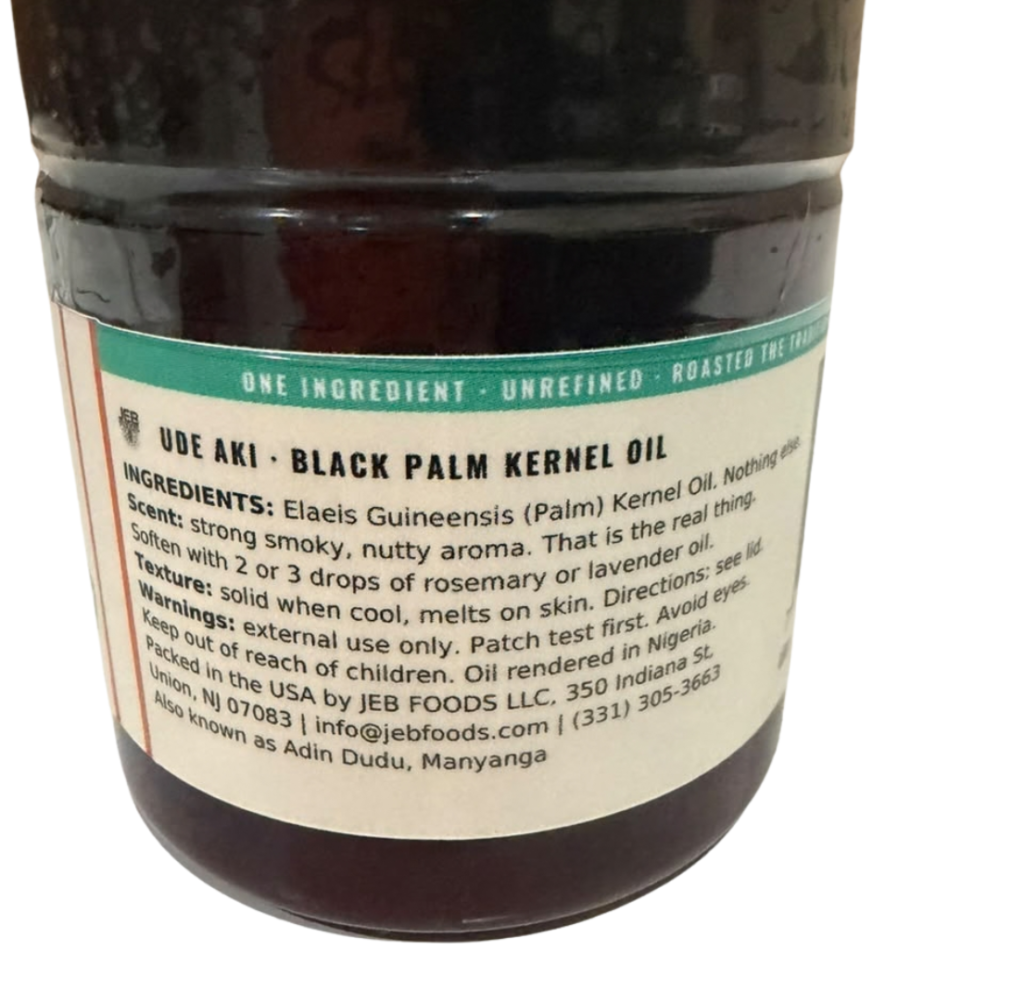
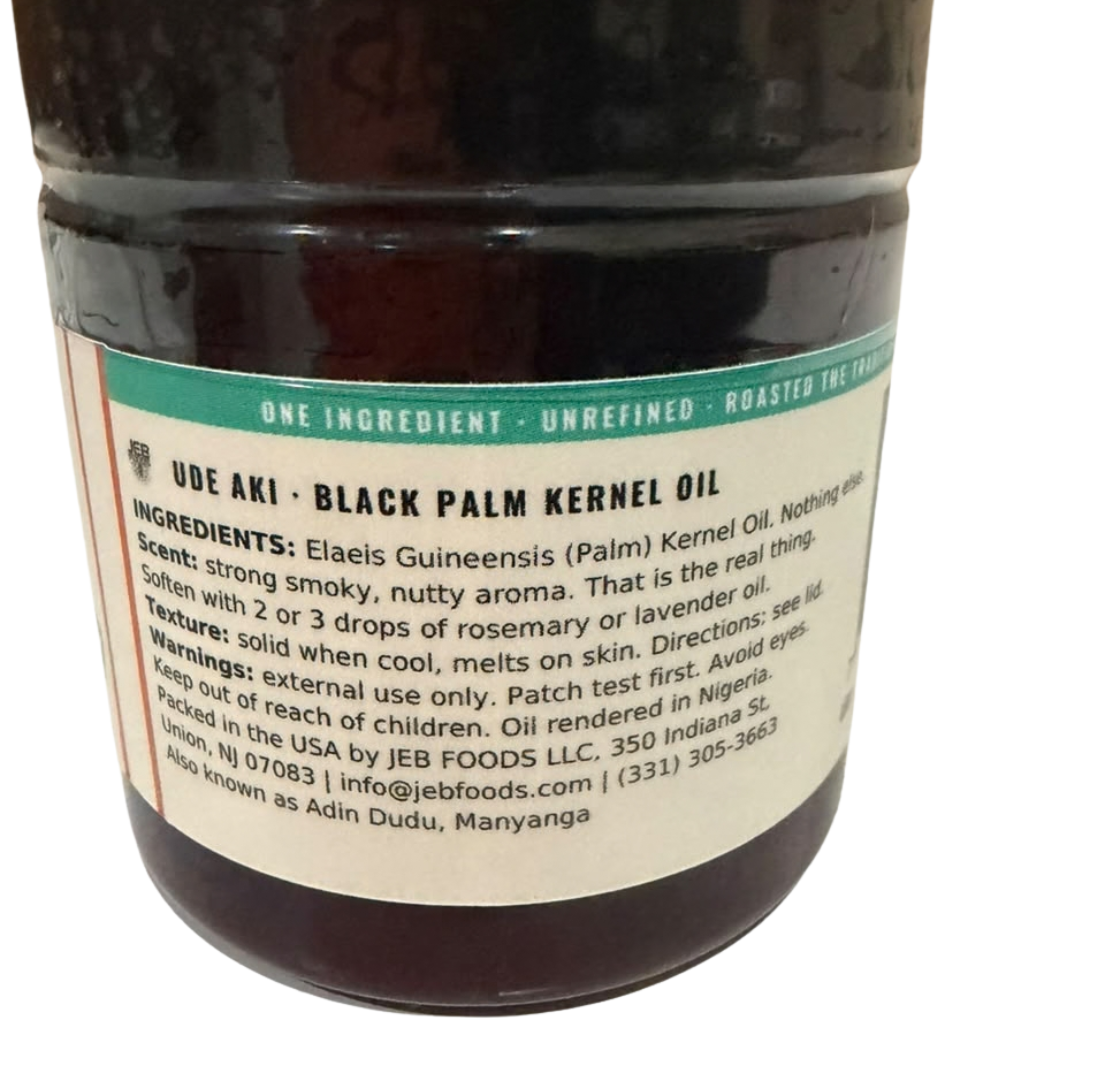
- A strong smell. Ude Aki has a strong smoky, nutty scent. That is the real thing, and it fades after a few minutes.
- Marks on fabric. The oil is deep caramel to rich brown, so it can mark light pillowcases and clothes. Let it sink in, and use a satin bonnet at night.
- Solid or grainy texture. Both are normal. Warm it in your hands for a few seconds.
Possible skin reactions
According to the FDA, reactions to cosmetics can include itchy, red skin, hives, flaking or peeling skin, swelling of the face, and irritation of the eyes, nose or mouth. Severe reactions are rare. If you have trouble breathing or your face or throat swells, call 911.
Take extra care if you have sensitive skin, and never use batana oil on broken skin or near your eyes.
How to patch test batana oil
- Pick a small area, such as the inside of your arm.
- Apply a small amount of warmed oil.
- Wait and watch. Give it a day before using it on your face, scalp or a larger area.
- Stop if irritation occurs. Wash it off with soap and water.
What to do if you have a reaction
The FDA gives two steps:
- Stop using the product and contact your healthcare provider.
- Report the problem to the FDA. Use the MedWatch online form, or call 1-888-SAFEFOOD (1-888-723-3366) and choose option 4.
If it was Ude Aki, please tell us too, so we can log it and help. Email info@jebfoods.com or call (331) 305-3663.
How Ude Aki is kept safe
- One ingredient. Elaeis Guineensis (Palm) Kernel Oil. Nothing else, so there is only one thing to check if your skin reacts.
- No water, so no preservative needed. The oil contains no water, which is why it is sold without a preservative.
- Third party microbial tested. Certificate on request.
- Cracked, cooked over firewood and sieved. Nothing is bleached, deodorised or added.
How to avoid the everyday side effects
- Use less than you think. You can always add more.
- Apply to damp hair as a sealer, and wash out heavy treatments after a few hours.
- Shampoo onto dry, oiled hair before adding water.
- Cover your hair at night if you leave it in.
See how to use batana oil on hair and batana oil for skin and face.
Questions people ask
Is batana oil safe to use every day?
For most people, yes, once a patch test has gone well. Most people do not need it every day. Resealing hair every two to three days is usually enough.
Can I use batana oil near my eyes?
No. Avoid contact with eyes.
Can I use batana oil on children?
Ask your child’s doctor first. Keep the jar out of reach of children.
Can I eat batana oil or cook with it?
No. Ude Aki is sold as a cosmetic, for external use only.
Are Honduran and African batana oil different for safety?
Same family, different home, same job. Both are kernel oils from the oil palm family, made the same way. One process, two continents. The same patch test and label rules apply to both. Read batana oil vs black palm kernel oil.
The label warnings
For external use only. Patch test on a small area before first use and stop if irritation occurs. Avoid contact with eyes. Keep out of reach of children. Not for use on broken skin. Store cool and closed.
Where to get Ude Aki
JEB FOODS Ude Aki Black Palm Kernel Oil, 4 oz is one ingredient and nothing else, cooked over firewood in Nigeria and packed in the USA. Scan the QR code on the lid, or visit jebfoods.com/real, to check your jar is real.
Part of the profit funds our nonprofit organization, Save All Africa Kids (saak.org).
Sources
- US Food and Drug Administration. What should I do if I have a reaction (side effect) to a cosmetic product?
- US Food and Drug Administration. Allergens in Cosmetics.
- Burnett CL, et al. Safety Assessment of Plant-Derived Fatty Acid Oils. International Journal of Toxicology, 2017.
- Cosmetics Europe, COSMILE Europe. Elaeis Oleifera Kernel Oil.