
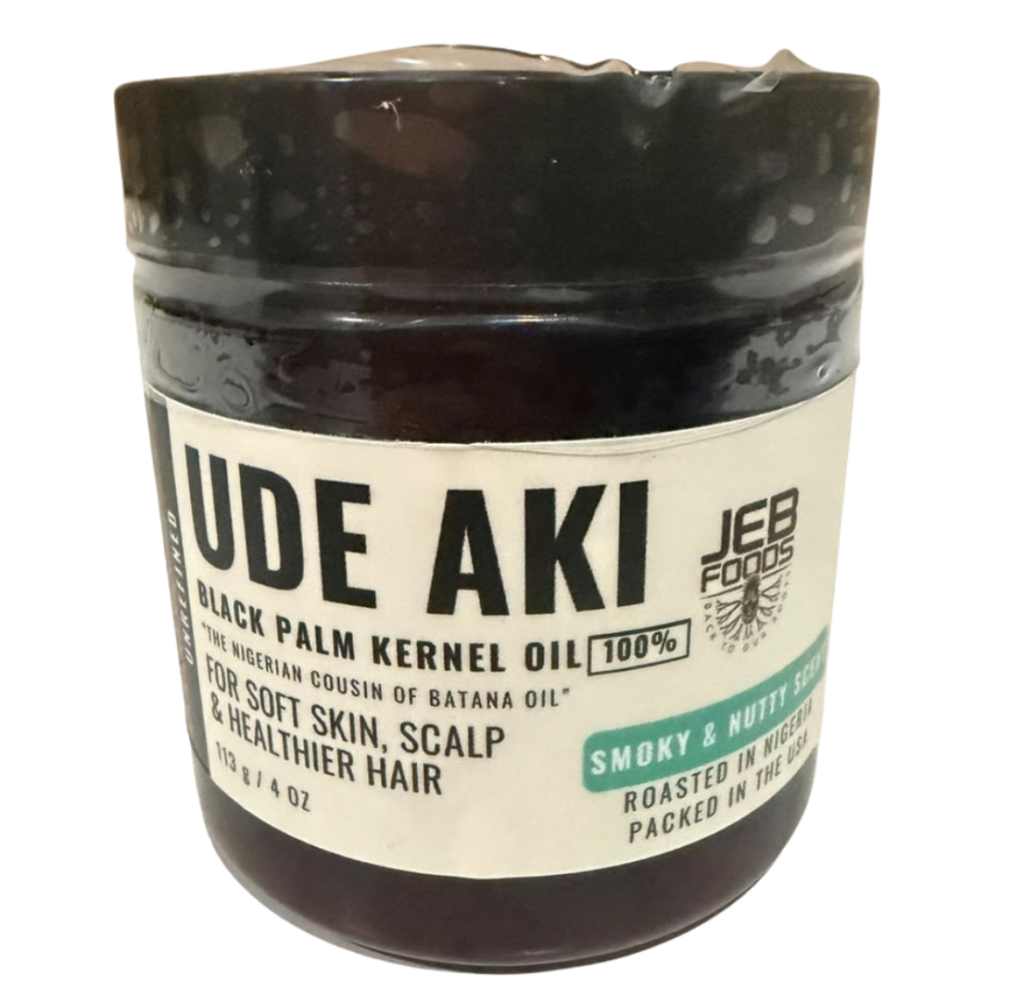
Black palm kernel oil vs castor oil, coconut oil and rosemary oil: which one is which? Stand in any hair and body aisle and you will see all four side by side. They are not four versions of the same thing. They come from different plants, they feel different in your hand, and one of them is not even the same kind of oil.
Here is how black palm kernel oil compares with each, in plain words.
First, what black palm kernel oil is
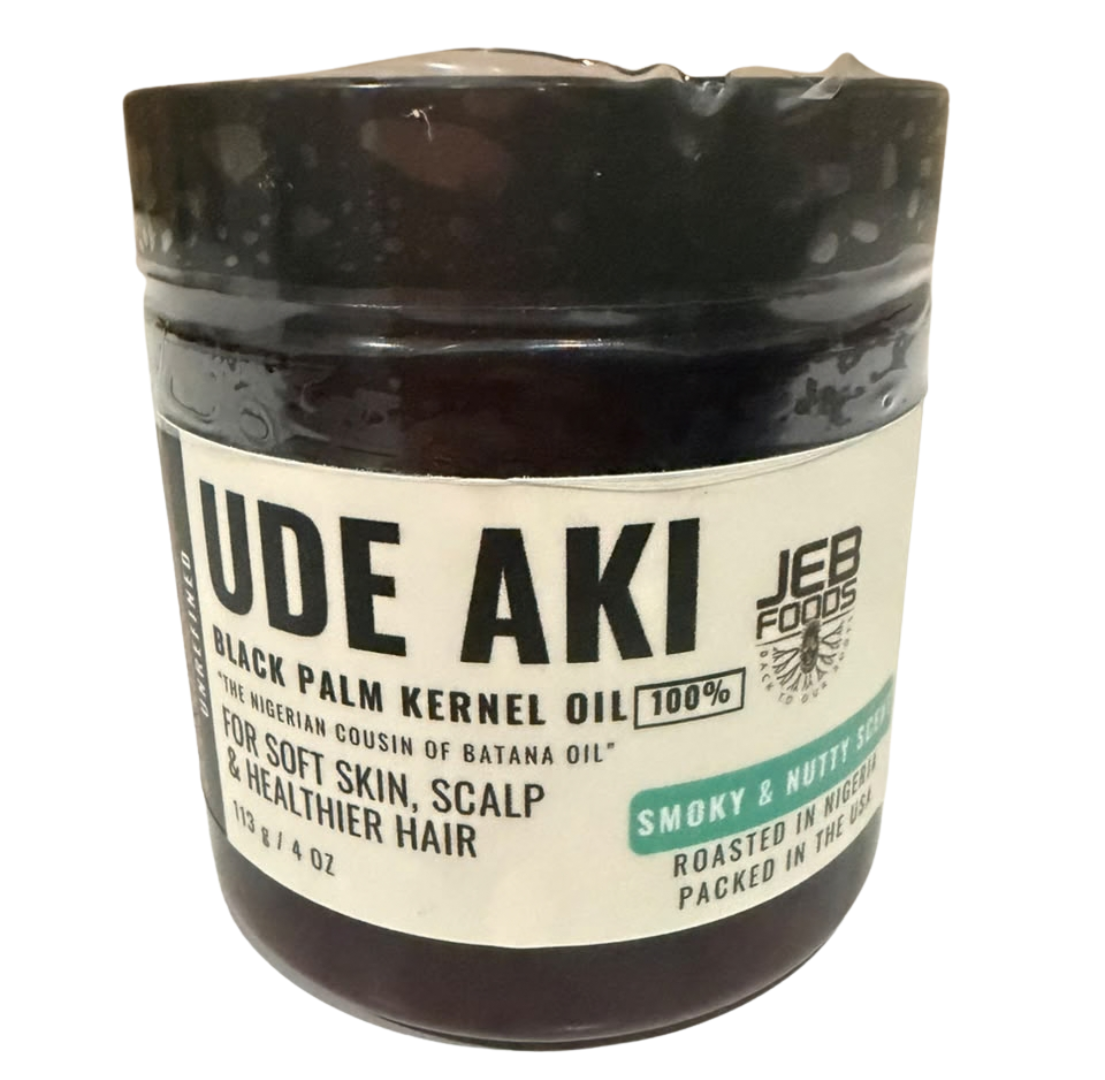
Black palm kernel oil is oil from the kernel of the African oil palm, Elaeis guineensis. In Nigeria it is called Ude Aki. It is also known as Adin Dudu and Manyanga.
Ours is made the traditional way: the palm nut is cracked, the kernels are cooked over firewood until the oil comes out, and everything is poured through a sieve. No press, no solvents, no bleaching. One ingredient and nothing else.
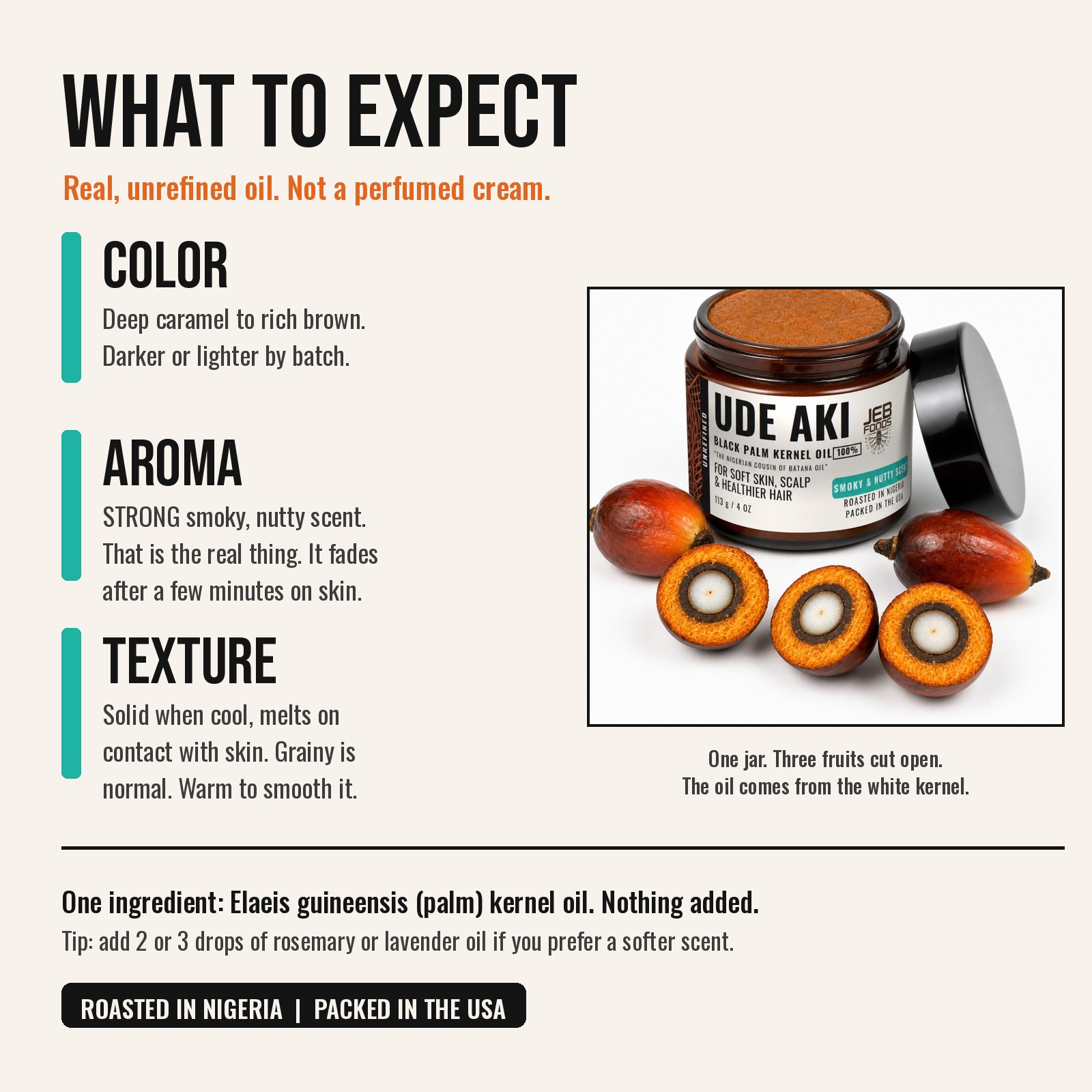
- Colour: deep caramel to rich brown. Darker or lighter by batch.
- Smell: strong, smoky and nutty. That is the real thing. It fades after a few minutes on skin.
- Texture: solid when cool, melts on contact with skin. Grainy is normal.
Black palm kernel oil vs castor oil
Castor oil comes from a completely different plant, the castor bean, Ricinus communis. It is made by cold pressing the seeds, and it is a colourless to pale yellow, thick, slow-pouring liquid. Almost all of it, 87 to 90 percent, is one fatty acid called ricinoleic acid.
Here is black palm kernel oil vs castor oil side by side:
| Black palm kernel oil (Ude Aki) | Castor oil | |
|---|---|---|
| Plant | African oil palm | Castor bean |
| Part used | The kernel inside the palm nut | The seed |
| How it is made | Cracked, cooked over firewood, sieved | Cold pressed |
| At room temperature | Solid balm that melts on skin | Thick liquid |
| Colour | Deep caramel to rich brown | Colourless to pale yellow |
Which to choose? Black palm kernel oil vs castor oil comes down to texture. If you want a thick, heavy liquid, castor oil is that. If you want a balm that melts into skin, scalp and hair to moisturize and seal in moisture, that is black palm kernel oil.
Black palm kernel oil vs coconut oil
Of the three, palm kernel oil vs coconut oil is the closest match. Palm kernel oil and coconut oil are the two classic “lauric” oils. About 48 percent of palm kernel oil is lauric acid. In coconut oil it is close to half as well. Both are firm when cool and melt easily.
So in palm kernel oil vs coconut oil, the differences are where they come from and how they are made:
| Black palm kernel oil (Ude Aki) | Coconut oil | |
|---|---|---|
| Plant | African oil palm | Coconut palm |
| Part used | The palm kernel | The white coconut meat |
| When cool | Solid | Solid below about 77°F |
| Look and smell | Deep caramel to rich brown, smoky and nutty, from the firewood roast | Usually white or clear, with a light coconut smell |
Which to choose? Palm kernel oil vs coconut oil is a close call. If you love coconut oil but want the traditional West African version, fire-roasted the way it has been made for generations, black palm kernel oil is the one to try.
Black palm kernel oil vs rosemary oil
This comparison surprises people, because rosemary oil is not the same kind of oil at all.
Rosemary oil is an essential oil. It is made by passing steam through rosemary leaves, and it is strong enough that it is meant to be diluted in a carrier oil before it touches skin. You use it a few drops at a time.
Black palm kernel oil is a carrier-type oil. You use it on its own, straight from the jar.
So it is not really “one or the other”. Many people who like rosemary oil already need a base oil to carry it. If you use rosemary oil, follow the directions and cautions on its own label.
And batana oil?
Batana oil is the closest relative of all. Batana oil comes from the kernel of the American oil palm, Elaeis oleifera, which grows from Honduras to northern Brazil. Black palm kernel oil comes from the kernel of the African oil palm, which is why it is often sold as African batana oil. Both are kernel oils made the same way: cracked, cooked over a fire, sieved. One process, two continents. The species is the only real difference.
For the full side by side, read batana oil vs black palm kernel oil and African batana oil: what it is and what it is really called.
At a glance
Here is black palm kernel oil vs castor, coconut and rosemary oil in one table.
| Oil | What it is | How it feels | How you use it |
|---|---|---|---|
| Black palm kernel oil (Ude Aki) | Kernel oil, African oil palm | Solid balm, melts on skin | On its own, a little at a time |
| Castor oil | Seed oil, castor bean | Thick liquid | On its own |
| Coconut oil | Oil from coconut meat | Solid when cool, melts easily | On its own |
| Rosemary oil | Essential oil, rosemary leaves | Thin, very strong | A few drops, diluted in a carrier oil |
How people use black palm kernel oil
In West Africa it is used on skin, scalp and hair: to moisturize, soften, seal in moisture and for strong hair. Warm a small amount between your palms and work it in. For step by step routines, read Ude Aki for hair.
Patch test on a small area before first use and stop if irritation occurs. For external use only.
Where to get it
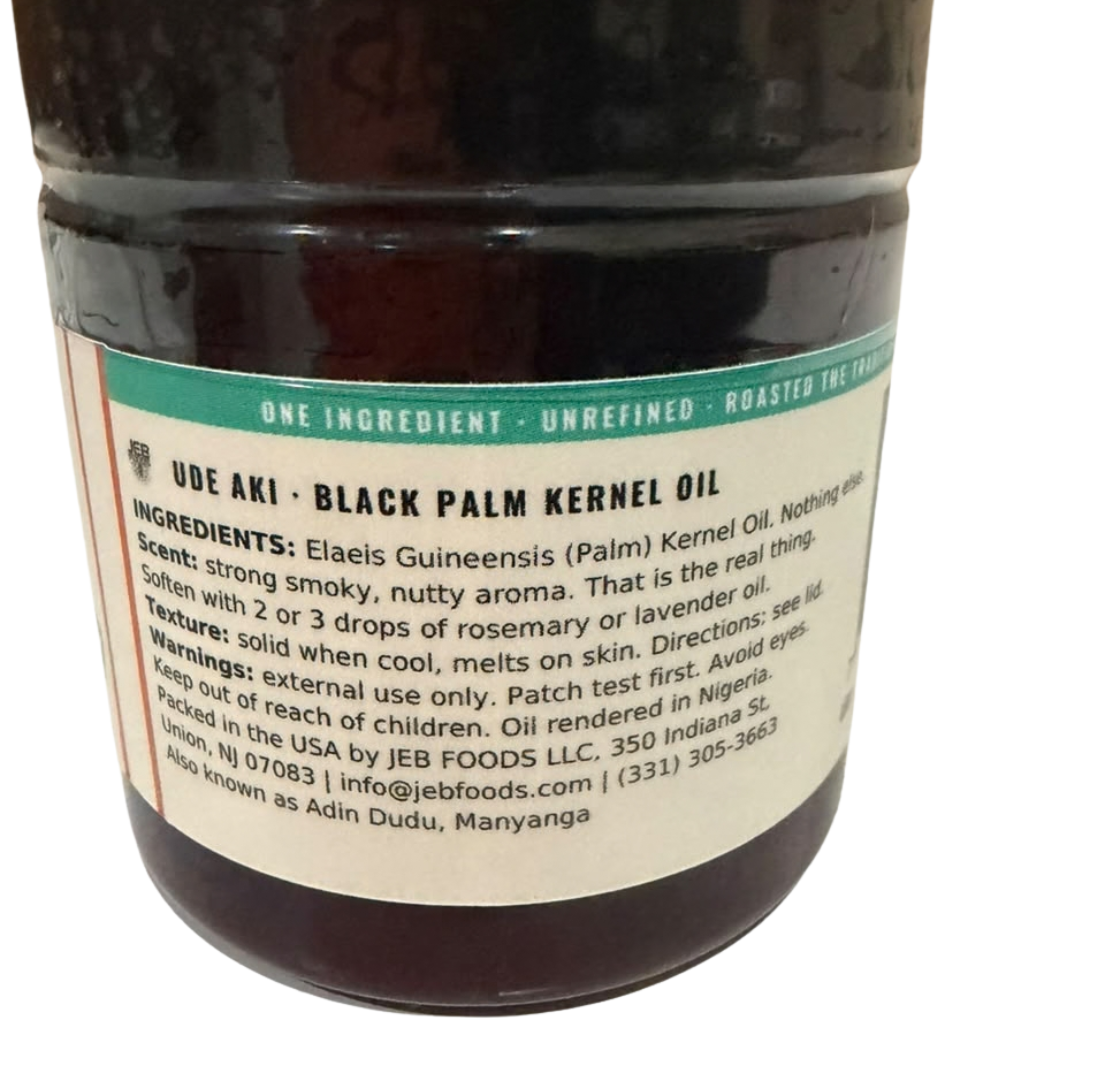
JEB FOODS Ude Aki Black Palm Kernel Oil is one ingredient and nothing else: unrefined palm kernel oil, roasted over firewood in Nigeria and packed in the USA. Every lid carries a QR code so you can check your jar is real at jebfoods.com/real.
Read next: Ude Aki in English: names, uses and how it is made and African batana oil: what it is and what it is really called.
Buying batana oil? Read real batana oil vs fake: 7 ways to tell before you buy.