
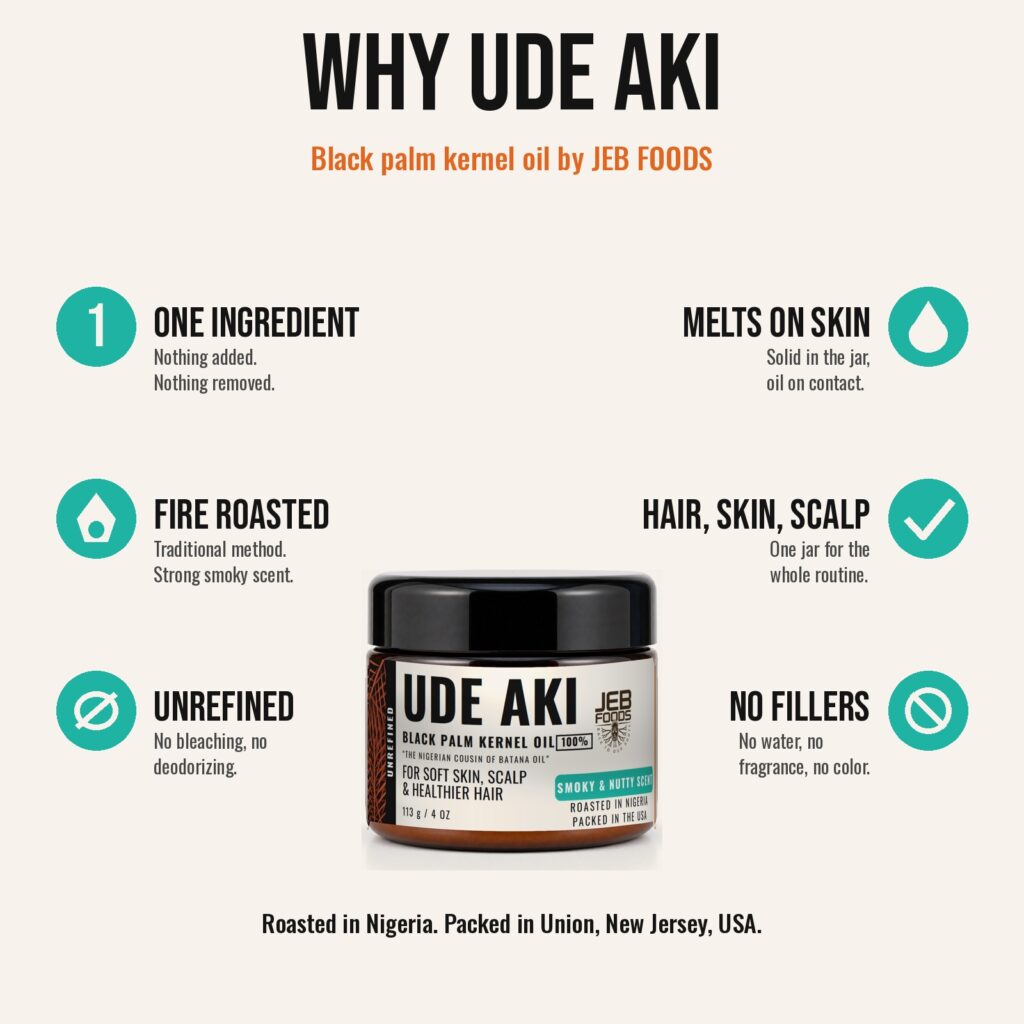
Search for batana oil long enough and you will see a second product: African batana oil. Sometimes it is sold as black batana oil, West African batana oil or raw African batana oil.
So is there an African batana oil? Here is the plain answer.
The short answer
Batana oil comes from one palm. African batana oil comes from its close relative.
The oil palm family, Elaeis, has exactly two species:
- Elaeis oleifera, the American oil palm. It grows from Honduras to northern Brazil. Its kernel oil is batana oil, also called ojon oil.
- Elaeis guineensis, the African oil palm. It grows from the Gambia to Angola, and Nigeria sits right in the middle of that range. Its kernel oil is what gets sold as African batana oil.
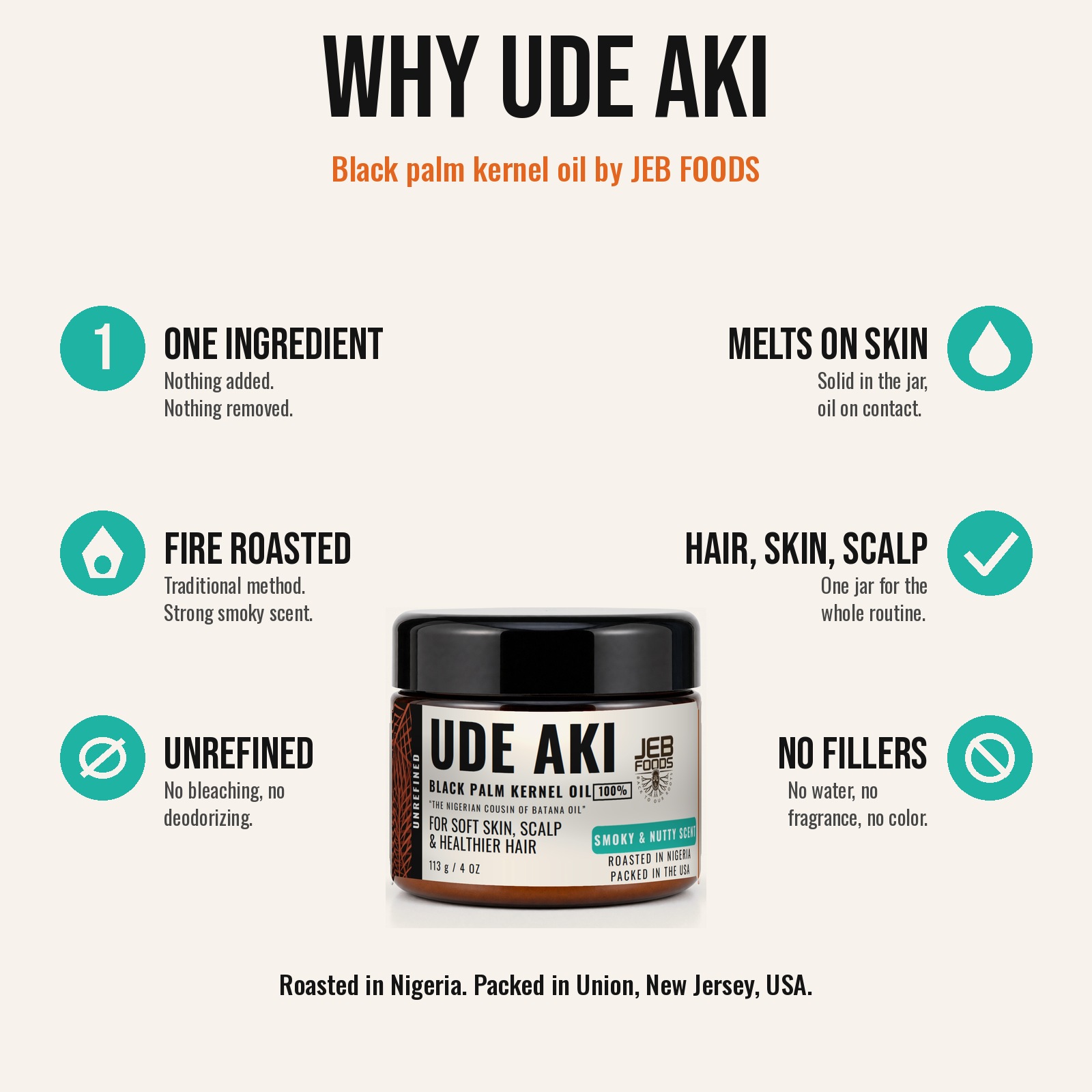
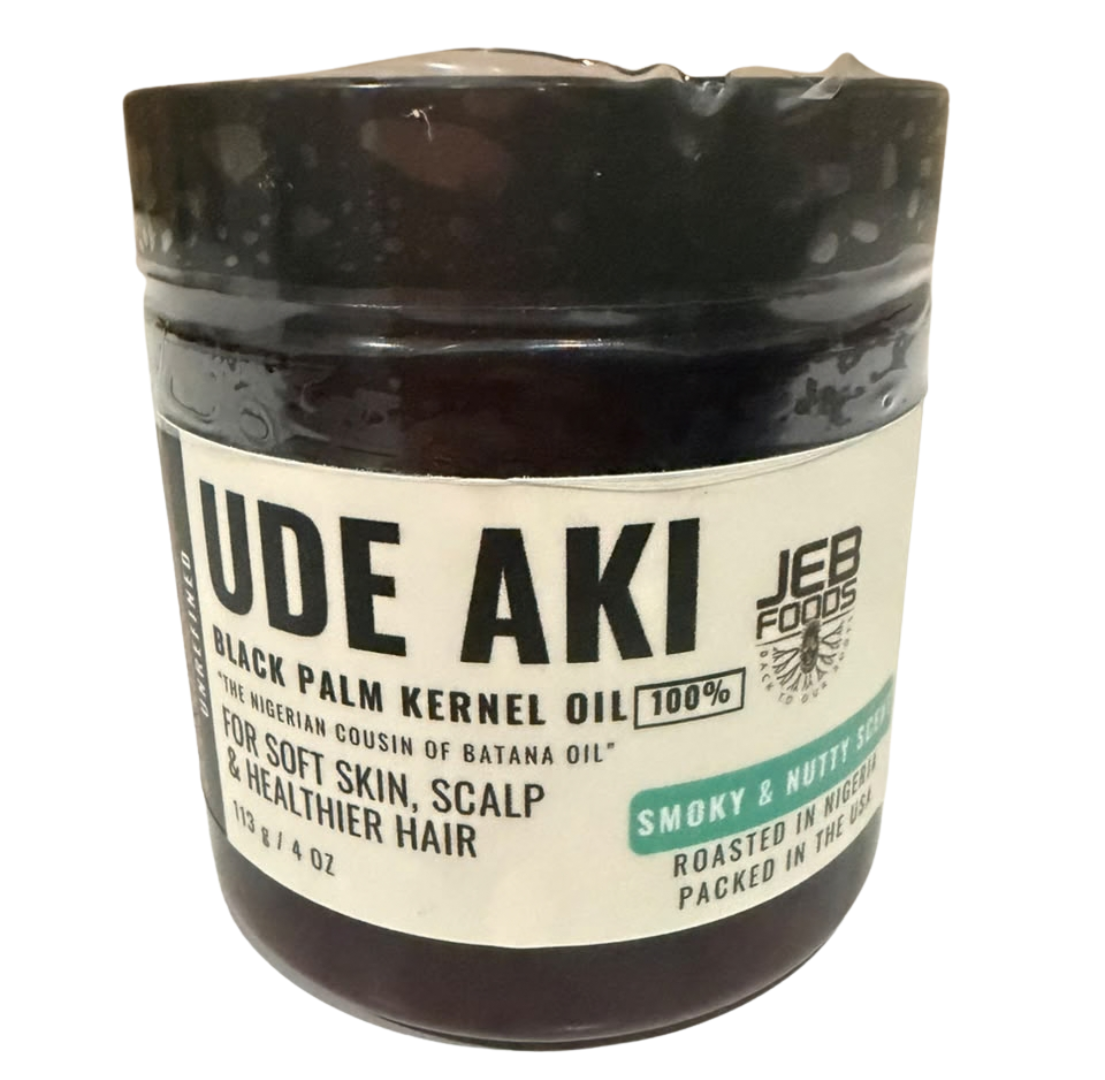
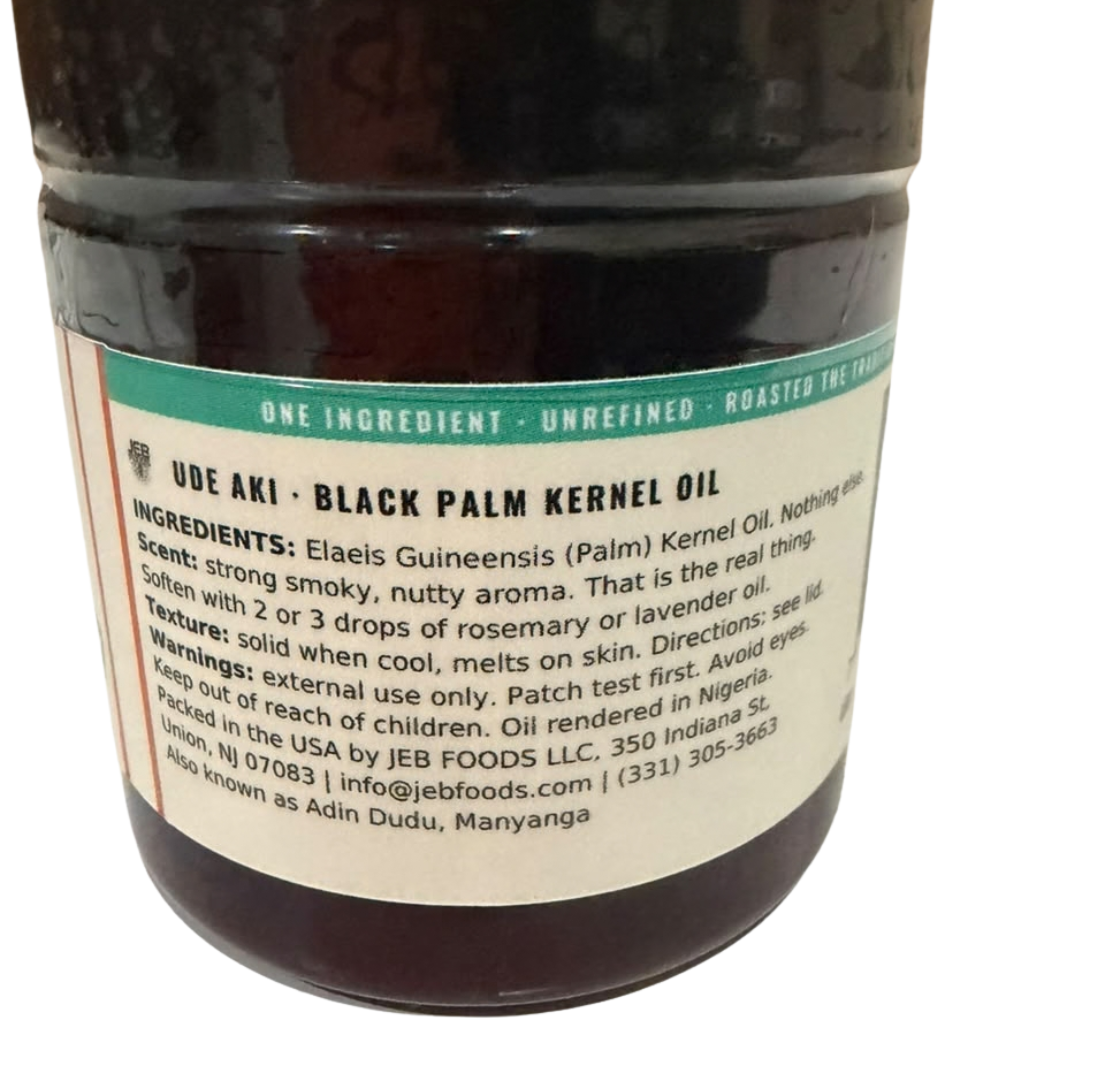
In Nigeria it has its own names. We call ours Ude Aki. It is also known as Adin Dudu and Manyanga. In English it is black palm kernel oil.
Same family, different home, same job.
One process, two continents
Both oils are made the same way. The palm nuts are cracked, by stone in the old days and by machine today. The kernels go into a pot and are cooked over a fire until the oil comes out. Then everything is poured through a sieve.
There is no pressing, no solvents and no bleaching.
West Africans have been cracking these kernels for around 5,000 years.
Why is it called “black” when it is not black?
This one surprises people. Black palm kernel oil is not black.
- Colour: deep caramel to rich brown. Darker or lighter by batch.
- Smell: strong, smoky and nutty. That is the real thing. It fades after a few minutes on skin.
- Texture: solid when cool, melts on contact with skin. Grainy is normal. Warm it to smooth it.
The same jar can look different depending on how you look at it. Look down into a full jar and you are looking through a lot of oil at once, so it looks very dark. Take a little out and rub it on your skin and it is a warm caramel orange. Batches run a shade lighter or darker because every batch is roasted over a live fire.
Solid or liquid?
Both are normal. Whatever the weather did in transit decides which one lands on your doorstep. If it arrives solid, warm it in your hands for a few seconds.
African batana oil vs batana oil
| Batana oil | African batana oil (Ude Aki) | |
|---|---|---|
| Palm species | Elaeis oleifera, the American oil palm | Elaeis guineensis, the African oil palm |
| Where it grows | Honduras to northern Brazil | The Gambia to Angola, including Nigeria |
| Part of the palm | The kernel | The kernel |
| How it is made | Cracked, cooked over a fire, sieved | Cracked, cooked over a fire, sieved |
The species is the only real difference. For the full side by side, read batana oil vs palm kernel oil: what is the difference.
How people use it
It is used on skin, scalp and hair to moisturize, soften and seal in moisture. In West Africa it is used for strong hair.
A little goes a long way. Warm a small amount between your palms, then work it into the scalp or the ends of your hair, or smooth it over dry skin. There is a full guide here: how to use black palm kernel oil on hair, scalp and skin.
Patch test on a small area before first use and stop if irritation occurs. It is for external use only.
Is it the same as red palm oil?
No. Red palm oil comes from the soft orange flesh of the palm fruit. Palm kernel oil comes from the kernel inside the nut. Different part, different oil.
Where to get it
JEB FOODS Ude Aki Black Palm Kernel Oil is one ingredient and nothing else: unrefined palm kernel oil, roasted over firewood in Nigeria and packed in the USA.
Buying batana oil? Read real batana oil vs fake: 7 ways to tell before you buy.